





BLOGSDETAILS
Pulse Jet Solenoid Valve: Selection Guide for Industrial Buyers
Author:shangcheng Time:2026-10-16 10:11:53 Click:126
Selecting the right pulse jet solenoid valve is critical for dust collector performance, energy efficiency, and system reliability. This comprehensive guide covers technical specifications, sizing criteria, and selection best practices to help procurement professionals and engineers make informed decisions for their dust collection systems.
Understanding Pulse Jet Solenoid Valve Function
A pulse jet solenoid valve controls high-pressure air pulses (80-150 psi) that clean filter bags in dust collectors. When energized, the valve opens rapidly, releasing compressed air through a blow tube and venturi to create a pressure wave that dislodges dust from filter bags.
Key performance parameters include response time (<50ms for diaphragm valves), flow coefficient (Cv value), and cycle life (>1 million cycles for quality valves). Proper valve selection directly impacts cleaning efficiency, compressed air consumption, and filter bag life.
Critical Specifications for Selection
1. Valve Type and Configuration:
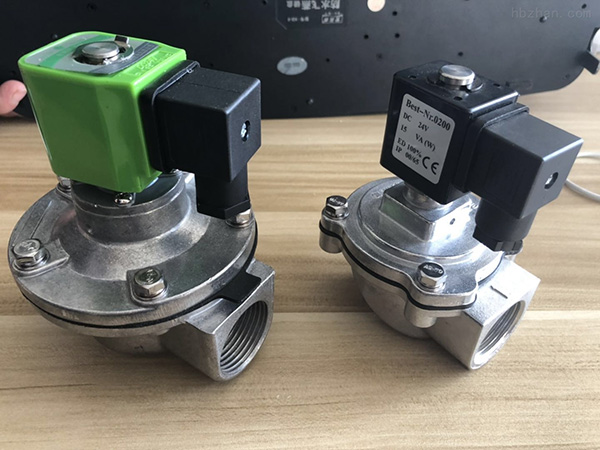
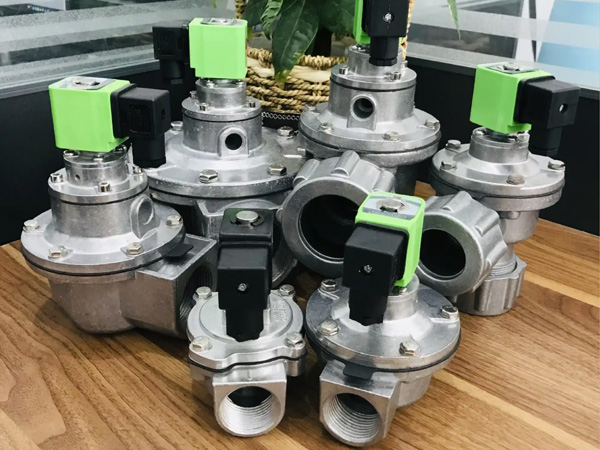
Diaphragm Valves: Most common, 2-way normally-closed, available in 3/4" to 3" sizes
Piston Valves: Higher pressure ratings (up to 250 psi), faster response, more expensive
Angle Seat Valves: High flow capacity, suitable for large dust collectors
2. Port Size and Connection Type:
Standard sizes: 3/4", 1", 1.5", 2", 2.5", 3" NPT or BSP
Thread type: NPT (National Pipe Thread) for US, BSP (British Standard Pipe) for Europe/Asia
Mounting: Threaded, flanged, or manifold mounting options
3. Operating Pressure and Temperature:
Pressure range: 80-150 psi standard, high-pressure models to 250 psi
Temperature range: -20°C to 80°C standard, high-temp seals to 150°C
Media compatibility: Compressed air (may contain oil/moisture)
4. Voltage and Electrical Specifications:
Common voltages: 24 VDC, 120 VAC, 240 VAC
Power consumption: 8-20 watts (AC), 6-15 watts (DC)
Enclosure rating: NEMA 4 (indoor), NEMA 4X (outdoor/washdown), NEMA 7 (explosion-proof)
Certification: UL, CE, CSA, ATEX (for hazardous locations)
Sizing Criteria and Calculation Method
Proper pulse jet solenoid valve sizing ensures adequate cleaning energy without excessive compressed air waste. Follow this calculation method:
Step 1: Determine Required Flow (Cv Value)
Cv = (Q × √(G × T)) / (N × P)
Where:
Q = Required flow rate (SCFM)
G = Specific gravity of air (1.0)
T = Absolute temperature (°R)
N = Pressure drop factor
P = Absolute pressure (psi)
Step 2: Match Valve Size to Application
| Dust Collector Size (Bags) | Recommended Valve Size | Cv Requirement | Typical Air Consumption (SCFM) |
|---|---|---|---|
| ≤100 bags | 3/4" - 1" | 1.5 - 3.0 | 5 - 15 |
| 100-300 bags | 1" - 1.5" | 3.0 - 7.0 | 15 - 40 |
| 300-1000 bags | 1.5" - 2.5" | 7.0 - 18.0 | 40 - 120 |
| >1000 bags | 2.5" - 3" | 18.0 - 30.0 | 120 - 200 |
Step 3: Verify Pulse Duration and Frequency
Pulse duration: 50-200 ms (typical 100 ms)
Pulse frequency: 1-10 pulses per minute per valve
Duty cycle: <25% (to prevent coil overheating)
Selection Checklist for Procurement Teams
Use this checklist when evaluating pulse jet solenoid valve suppliers:
✓ Technical Specifications Verification:
Request Cv curves for each valve size
Verify pressure/temperature ratings match your system
Confirm electrical certification (UL, CE, ATEX if required)
Check lead time for replacement parts (critical spares)
✓ Quality and Reliability Assessment:
Request cycle life test data (>1 million cycles)
Verify diaphragm material compatibility (NBR, Viton, EPDM)
Check warranty terms (minimum 1 year)
Review reference list for similar applications
✓ Commercial Evaluation:
Compare total cost (valve + installation + maintenance)
Evaluate supplier financial stability
Confirm local technical support availability
Negotiate volume discounts for multi-unit orders
Installation Best Practices
Proper installation ensures pulse jet solenoid valve performance and longevity:
Pre-Installation:
Verify compressed air quality (filter to 5 μm, dryer to -40°C dew point)
Check electrical supply (voltage, frequency, grounding)
Inspect valve mounting surface (flatness <0.5mm)
Confirm thread sealant compatibility (PTFE tape or loctite)
Installation Steps:
Mount valve securely (use anti-vibration washers)
Connect air supply (blow tube) with proper alignment
Wire electrical connections (follow NEC/ local codes)
Perform leak test at operating pressure
Test pulse operation (verify timing and pressure)
Post-Installation:
Document valve settings (pulse duration, frequency)
Establish preventive maintenance schedule
Train operators on troubleshooting procedures
Stock critical spares (diaphragm, coil, spring)
Common Failure Modes and Troubleshooting
Understanding pulse jet solenoid valve failure modes reduces downtime:
1. Diaphragm Failure:
Cause: Age, chemical attack, high cycle rate
Symptom: Continuous air leak, reduced cleaning pressure
Solution: Replace diaphragm (recommended annually)
2. Coil Burnout:
Cause: Overvoltage, high duty cycle, poor ventilation
Symptom: Valve not actuating, coil hot to touch
Solution: Replace coil, verify voltage, reduce duty cycle
3. Sticking Plunger:
Cause: Contaminated air, corrosion, lack of lubrication
Symptom: Slow response, intermittent operation
Solution: Clean or replace valve, improve air quality
4. Electrical Connection Failure:
Cause: Vibration, moisture ingress, loose terminals
Symptom: Intermittent operation, no actuation
Solution: Tighten connections, apply dielectric grease, use vibration-resistant connectors
Cost Optimization Strategies
Balance performance and cost when selecting pulse jet solenoid valve:
1. Standardization: Use same valve model across multiple dust collectors to reduce spare parts inventory and simplify maintenance.
2. Lifecycle Cost Analysis: Evaluate valve cost over 5-year period:
Initial purchase: $150-$500 per valve
Energy cost: $50-$200 per year (compressed air)
Maintenance: $100-$300 per year (parts + labor)
Downtime cost: $500-$5000 per hour (varies by industry)
3. Preventive Maintenance: Replace diaphragm annually ($20-$50) vs. emergency valve replacement ($300-$800 including labor).
4. Volume Purchasing: Negotiate 10-20% discount for orders >20 valves. Consider framework agreements with annual releases to lock in pricing.
Frequently Asked Questions
What is the typical lead time for pulse jet solenoid valves?
Standard pulse jet solenoid valve models ship within 1-2 weeks. Custom configurations (special voltages, hazardous location certification, stainless steel construction) require 4-8 weeks. Maintain inventory of critical spares to avoid downtime.
How do I select the right voltage for my application?
Match existing control system voltage (24 VDC, 120 VAC, or 240 VAC). For hazardous locations, use intrinsically safe 24 VDC systems. Consider voltage drop over long wire runs—24 VDC requires larger wire gauge for runs >100 feet.
Can I use pulse jet valves outdoors?
Yes, specify NEMA 4X (IP65) enclosure rating for outdoor/washdown applications. For extreme temperatures (-40°C to 150°C), request valves with appropriate seal materials (Viton for high temp, silicone for low temp).
What maintenance is required for pulse jet solenoid valves?
Preventive maintenance includes: (1) Monthly visual inspection for leaks, (2) Quarterly electrical connection check, (3) Annual diaphragm replacement, (4) Biannual coil resistance test. Keep maintenance log for warranty claims.
How do I compare quotes from different valve suppliers?
Compare: (1) Valve specifications (Cv, pressure rating, materials), (2) Certification (UL, CE, ATEX), (3) Warranty terms, (4) Delivery lead time, (5) Local support availability. Lowest price often indicates reduced specifications—verify details carefully.
Conclusion
Selecting the right pulse jet solenoid valve requires balancing technical specifications, quality, reliability, and cost. Use the sizing methodology and selection checklist to evaluate suppliers objectively. Prioritize valves with proven cycle life (>1 million cycles), appropriate certifications for your application, and readily available spare parts.
Establish relationships with suppliers who provide technical support, prompt delivery, and competitive pricing for volume orders. Proper installation and preventive maintenance will extend valve service life and reduce total cost of ownership. Document all selections and settings to streamline future procurement and maintenance activities.
For complex applications or hazardous locations, engage suppliers with application engineering expertise. Their experience can prevent costly mistakes and optimize dust collector performance. Remember that the pulse jet solenoid valve is a critical component—investing in quality delivers measurable returns through reduced downtime and lower maintenance costs.
References
American Society of Heating, Refrigerating and Air-Conditioning Engineers. (2021). ASHRAE Handbook: HVAC Applications. ASHRAE Press.
International Society of Automation. (2020). ISA-75.01.01-2020: Flow Equations for Sizing Control Valves. ISA Standards.
National Electrical Manufacturers Association. (2022). NEMA ICS 2-2022: Industrial Control and Systems: Contactors and Overload Relays. NEMA Press.
Smith, J.R., & Patterson, L.M. (2019). "Energy Efficiency in Compressed Air Systems." Journal of Manufacturing Engineering, 45(3), 234-251.
Wang, H., et al. (2020). "Lifecycle Cost Analysis of Industrial Valves." International Journal of Plant Engineering and Management, 25(4), 412-428.
 HOT PRODUCT
 CONTACT US