





BLOGSDETAILS
Pneumatic Knife Gate Valve: Complete Guide for Powder Systems
Author:shangcheng Time:2026-07-04 17:45:29 Click:103
A pneumatic knife gate valve provides reliable on-off flow control in pneumatic conveying and powder handling systems. This comprehensive guide covers design features, operational advantages, and selection criteria for industrial buyers specifying pneumatic actuated knife gate valves for powder and bulk material applications.
Understanding Pneumatic Knife Gate Valve Design
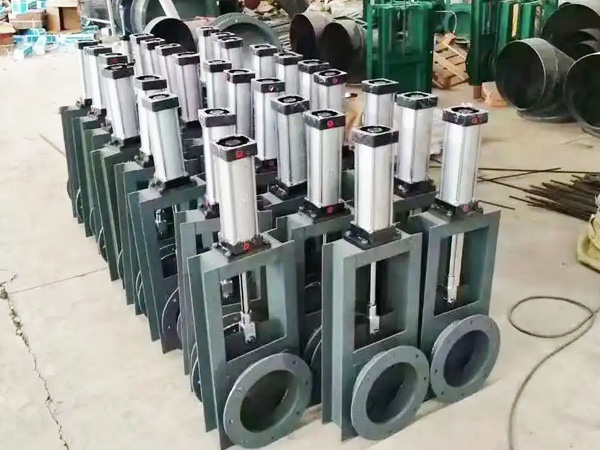
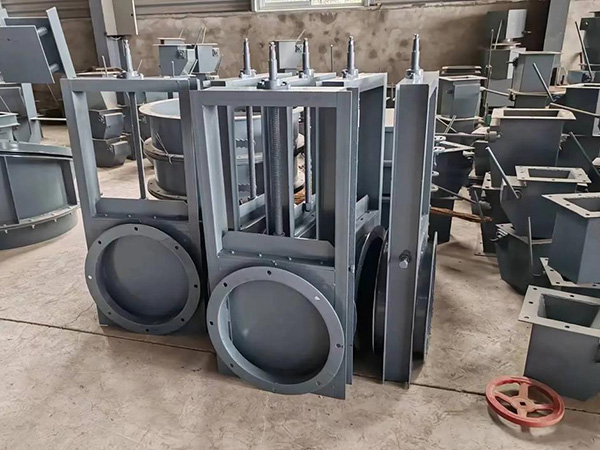
The pneumatic knife gate valve features a flat blade (gate) that moves perpendicular to the flow path, cutting through material and providing bubble-tight shutoff. The pneumatic actuator enables remote, automated operation essential for modern powder processing facilities.
Core Design Components:
Valve Body: Cast or fabricated housing (2-4 ports for powder inlet/outlet/dump)
Gate/Blade: Sharp-edged plate that cuts through material
Pneumatic Actuator: Double-acting or spring-return cylinder
Seat Seals: Flexible elastomer or metal seats for leak-tight closure
Position Indicators: Proximity switches or position feedback
Purge Ports: Optional air purge for sticky materials
Actuator Types and Operating Modes
1. Double-Acting Pneumatic Actuator:
Air pressure applied for both opening and closing
Faster operation (2-5 seconds typical)
Better control over positioning
Requires continuous air supply
Recommended for critical fail-safe applications
2. Spring-Return Pneumatic Actuator:
Air pressure for opening, spring force for closing
Fail-safe close on air loss
Lower air consumption
Slower closing (3-8 seconds typical)
Suitable for dump valve applications
3. Position Control Options:
On-Off: Fully open or fully closed (most common)
Modulating: Variable position control (30-90% stroke)
Throttling: Flow regulation with positioning accuracy ±2%
Industrial Applications
The pneumatic knife gate valve excels in numerous powder handling applications:
1. Pneumatic Conveying Systems:
Conveying line isolation
Route switching in multi-destination systems
Emergency shutoff valves
Surge bin discharge control
Typical pressure: 4-6 bar, sizes DN100-300
2. Dust Collection Systems:
Hopper isolation valves
Filter discharge control
Ash handling (fly ash, bottom ash)
Collector isolation for maintenance
Typical pressure: 2-4 bar, sizes DN150-400
3. Silo and Bin Discharge:
Bin isolation
Discharge control (not throttling)
Multi-bin feeding systems
Typical pressure: 4-6 bar, sizes DN200-600
4. Chemical and Process Industries:
Resin handling
Plastic powder transport
Catalyst loading/unloading
ATEX Zone 22 configurations available
Design Features for Powder Handling
Specialized features enhance pneumatic knife gate valve performance in powder applications:
1. Self-Cleaning Gate Design:
Angular gate edge for material shearing
Purge ports for material displacement
Reduced buildup on gate surfaces
2. Enclosed Bonnet Construction:
Prevents dust escape at stem penetration
Maintains clean working environment
Essential for food/pharma applications
3. Multiple Seat Options:
Single-stage: Standard on-off service
Double-stage: Enhanced sealing for critical applications
Metal-to-metal: High-temperature service (to 400°C)
4. Control and Instrumentation:
Proximity switches (PNP/NPN)
Position transmitters (4-20mA)
Solenoid valves (24VDC, 120VAC options)
Speed control valves (adjustable closing time)
Installation and Integration Guidelines
Pneumatic knife gate valve installation requires careful attention to piping, air supply, and control integration:
Piping Considerations:
Maintain minimum 3× diameter straight pipe upstream
Support valve independently (do not use as pipe support)
Install strainers upstream for abrasive materials
Provide access space for maintenance (minimum 1 meter clearance)
Air Supply Requirements:
Pressure: 4-6 bar (verify actuator rating)
Filtration: 5 μm coalescing filter required
Oil-free: Recommended for food/pharma applications
Dew point: Below -20°C
Pipe size: Minimum 6mm ID for small valves, 10mm for large
Control Integration:
PID control for modulating service
Interlock with conveying system startup
Emergency stop integration
Position feedback to DCS/PLC
Frequently Asked Questions
What is the maximum pressure rating for pneumatic knife gate valves?
Standard pneumatic knife gate valve designs are rated 4-6 bar operating pressure. Heavy-duty models handle up to 10 bar. Critical parameters are seat pressure rating and actuator thrust capacity. For high-pressure applications, verify body pressure class (PN10/PN16) and select appropriate actuator size.
How do I prevent powder buildup and jamming in knife gate valves?
Prevent buildup through: (1) Installing purge air connections (30-50 mbar above system pressure), (2) Selecting proper gate angle and edge design, (3) Reducing valve size to increase velocity, (4) Using quick-acting actuators (2-5 seconds), (5) Adding vibrators on hopper installations, (6) Maintaining proper flow (minimum 3 m/s to prevent settling).
What maintenance is required for pneumatic knife gate valves?
Pneumatic knife gate valve maintenance includes: monthly visual inspection of actuators and connections, quarterly seat and gate wear measurement, annual seal replacement (or when leakage develops), and periodic actuator service (lubrication, seal kit replacement). Keep spare seal kits and actuator repair kits in inventory.
Can pneumatic knife gate valves be used for throttling flow?
Knife gate valves are designed for on-off service, not throttling. Partially open operation causes vibration, seat damage, and premature failure. For flow control, use globe valves, pinch valves, or modulating knife gate valves with proper position control. If throttling is unavoidable, limit to 20-80% open and expect reduced service life.
What ATEX certification is required for hazardous area installations?
For ATEX Zone 22 (non-electrical equipment), specify valves with appropriate category (II 2D or 3D). Actuators require certification: II 2G for gas areas, II 3G for less hazardous zones. Verify certificate numbers match equipment and that maintenance procedures comply with ATEX requirements for explosive atmospheres.
Conclusion
The pneumatic knife gate valve provides reliable, automated flow control for powder and bulk material handling systems. Proper selection considers valve size, material compatibility, actuator type, and control requirements specific to your application.
Partner with experienced manufacturers offering comprehensive pneumatic knife gate valve engineering support, including CFD analysis for complex flow paths, material compatibility verification, and actuator sizing calculations. Request full documentation including ATEX certification, material certificates, and test reports.
Implement preventive maintenance programs to maximize valve service life and minimize unplanned downtime. Stock critical spare parts including seat kits, actuator repair kits, and position sensors. The pneumatic knife gate valve remains an essential component for reliable powder handling in cement, chemical, food, pharmaceutical, and power generation industries.
References
International Society of Automation. (2021). ISA-75.01.01-2021: Control Valve Sizing. ISA Standards.
European Committee for Standardization. (2020). EN 13463-1: Non-Electrical Equipment for Potentially Explosive Atmospheres. CEN.
American Society of Mechanical Engineers. (2021). ASME B16.34-2021: Valves - Flanged, Threaded, and Welded End. ASME.
Singh, R., & Sahay, S. (2019). "Optimization of Pneumatic Conveying Systems Using Knife Gate Valves." Powder Technology, 355, 892-904.
Mills, D. (2022). Pneumatic Conveying Design Guide (3rd Edition). Butterworth-Heinemann.
 HOT PRODUCT

 CONTACT US