





BLOGSDETAILS
Mining Baghouse Filtration System Applications Across Sites
Author:shangcheng Time:2026-10-07 11:01:52 Click:113
Mining moves enormous quantities of rock, and every movement creates dust. Beyond the obvious health and visibility problems, uncontrolled dust accelerates equipment wear, contaminates lubrication, and can form explosive atmospheres in enclosed structures. A mining baghouse filtration system is the standard control at the fixed points where dust is generated in volume: crushers, screens, conveyor transfer points, and concentrator circuits. The design challenge is not the filtration principle—that is well understood—but the environment: abrasive coarse dust, remote sites with limited power and water, and ores that can produce combustible dust. This article maps where baghouses are applied on a mine and the conditions that decide how they must be built.
Why Mining Needs Robust Dust Collection
Mine dust is coarse and hard, generated by breaking and rubbing rock rather than by fine industrial processes. It loads filters heavily and wears housings, cages, and discharge equipment. At the same time, mines are often in remote locations where skilled labor, spare parts, and utilities are scarce, so the equipment must run with minimal attention. A mining baghouse filtration system that is robust by design—and specified for the actual ore and site—avoids the repeated failures that plague under-built units in this service.
Dust Sources Across a Mine
Different operations produce different dust characteristics, and the collector location follows the material flow.
Drilling and Blasting
Drilling generates fine cuttings dust at the face; wet drilling or enclosed drill dust collectors are common, but secondary collection may be needed at crusher feed after blasting. The dust here is variable and often includes overburden minerals, so the mining baghouse filtration system serving downstream crushing must tolerate the full ore range.
Crushing and Screening
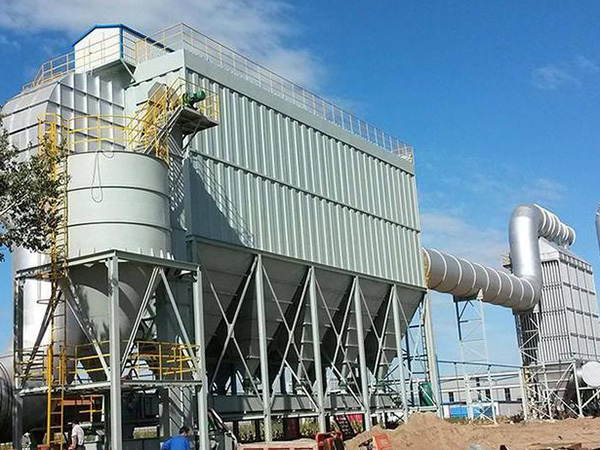
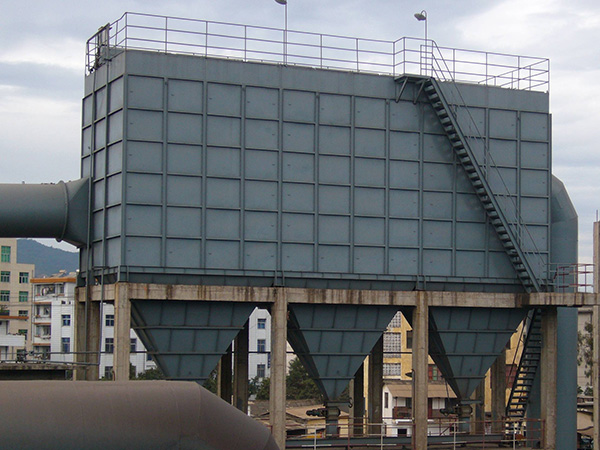
Crushers and screens are the largest fixed dust sources. Primary crushers near the pit and secondary/tertiary circuits in the plant both need local capture at the crusher housing and the discharge. Abrasion is severe because the dust is fresh, angular rock. Capture hoods must be positioned to pull from the generation point without drawing excessive air, which would oversize the collector and waste power.
Conveying and Transfer Points
Each belt transfer, tripper, and loading point sheds dust as material drops. A mining baghouse filtration system is often centralized, pulling from many transfer-point hoods through a duct network into one large collector. The challenge is balancing the duct system so no point is starved of capture airflow while the total volume stays manageable.
Concentrators and Mills
Grinding mills and flotation circuits generate finer dust, sometimes with reagent carryover. Here the dust is less abrasive but can be chemically active, so media choice considers both particle size and any reagent chemistry. Enclosed concentrator buildings rely on the collector for both compliance and visibility.
Abrasive and Coarse Dust Challenges
Coarse abrasive dust erodes inlet baffles, tubesheets, and cages, and packs hoppers. A mining baghouse filtration system for this duty uses abrasion-resistant inlet designs that drop the heavy fraction into the hopper before it reaches the bags, hardened cage and tubesheet surfaces, and conservative filtration velocity to limit bag flexing. Inlet velocity control—slowing the gas before it hits the bags—is one of the most effective wear-reduction measures and is a standard part of mining-spec collectors.
Remote and Arid-Site Factors
Many mines operate where water is scarce and power is limited or supplied by diesel. Dust suppression that depends on water is constrained, increasing reliance on dry collection. A mining baghouse filtration system on such a site is specified for low auxiliary power, robust self-cleaning, and minimal water use. Spare-parts strategy matters: components that would be a next-day delivery in a city may be weeks away at a remote site, so stocking critical wear parts and designing for field serviceability is part of the engineering, not an afterthought.
Explosive Atmosphere and Electrical Classification
Some ore dusts—certain coals, sulfides, and fine mineral fractions—can form explosive atmospheres when suspended and confined. Where this applies, the mining baghouse filtration system and its electrical equipment are specified to the site's hazardous-area classification, with appropriate motor and switchgear ratings, grounding, and often explosion-venting or isolation on the collector housing. The classification is determined by the ore dust's explosibility data and the local regulation, and it must be established before the equipment is ordered.
Filter Media and Housing for Mining Duty
Media choice balances abrasion resistance and release. Needlefelt polyester serves many above-freezing, non-corrosive duties; polyphenylene sulfide or other chemically resistant grades are used where the dust or environment is aggressive. The housing is built heavier than standard to resist both internal abrasion and external site conditions, with reinforced hoppers and reliable rotary-valve or screw discharge to keep abrasive dust moving. A mining baghouse filtration system that uses a general-industrial housing in this service will develop leaks and wear points that undermine capture.
Sizing and Redundancy
Sizing follows the captured airflow from all hoods plus the chosen filtration velocity. Because mining dust is coarse and abrasive, velocity is selected to control wear while still capturing the load. Redundancy is a site decision: a single large collector serving the whole plant has simpler operation but a single failure stops collection, while compartmented or parallel units allow continued operation during maintenance. The mining baghouse filtration system layout should reflect how critical continuous collection is to the operation and what shutdown tolerance the permit allows.
Integration With Material Handling
The collector is part of the material-handling circuit, not separate from it. Collected dust is usually returned to the product stream via the hopper discharge and a conveying system, so the discharge device must be compatible with the process and must not leak. A mining baghouse filtration system whose dust cannot be handled cleanly becomes a housekeeping burden and a recirculation source. Coordination between the dust-collection and conveying designers prevents this.
Maintenance in Harsh Conditions
Maintenance focuses on wear: periodic inspection of inlet baffles, tubesheets, cages, and hopper discharge; differential-pressure trending to detect blinding or leakage; and scheduled bag change timed to planned shutdowns. Because sites are remote, inspections are often less frequent but must be more deliberate, relying on trend data rather than routine visual checks. Stocking the wear parts that fail fastest is the single most effective uptime measure.
Procurement Data Package
Provide the vendor with the ore type and dust characteristics, the list of capture points and their airflows, dust loading and particle size, abrasive index if known, site temperature range, power availability, hazardous-area classification, and the emission or visibility limit. A mining baghouse filtration system quoted without the ore's abrasive and explosive properties will be the wrong unit for the site.
FAQ
Where are baghouses used most on a mine?
At fixed high-generation points: crushers, screens, conveyor transfer points, and concentrator circuits. Mobile face equipment usually uses separate or localized controls, with the centralized collector serving the plant.
How is abrasive mine dust handled by the collector?
By slowing the gas at the inlet so heavy particles drop into the hopper before reaching the bags, using hardened cages and tubesheets, and selecting a conservative filtration velocity to limit bag wear.
Does a mining baghouse need explosion protection?
Only where the ore dust can form an explosive atmosphere, which depends on the dust's explosibility and the local hazardous-area classification. The requirement is established from ore data and regulation before ordering.
Why does remote-site location affect the design?
Limited power, water, and spare parts change the specification toward low auxiliary power, dry operation, field serviceability, and on-site stocking of critical wear parts. These are engineering factors, not options.
Conclusion
A mining baghouse filtration system earns its place at the fixed dust-generation points across a mine—crushing, conveying, and concentration—where it controls health, visibility, equipment wear, and explosive risk. The design is governed by conditions that general industry does not face: coarse abrasive dust, remote sites with scarce utilities, and potentially combustible ore. Specifying the media, housing, velocity, and discharge for the actual ore and site, and planning maintenance around remote logistics, is what separates a collector that runs for years from one that fails early. Accurate ore and site data is the foundation of a defensible specification.
References
US EPA (1998). Profile of the Mining Industry (Sector Notebook Project).
Cooper, C. D., & Alley, F. C. (2011). Air Pollution Control: A Design Approach, 4th ed. Waveland Press.
NFPA 654 (2020). Standard for the Prevention of Fire and Dust Explosions from the Manufacturing, Processing, and Handling of Combustible Particulate Solids. NFPA.
Directive 2014/34/EU (ATEX). Equipment and protective systems intended for use in potentially explosive atmospheres.
 HOT PRODUCT
 CONTACT US