





BLOGSDETAILS
Industrial Ventilation Butterfly Valve: Applications and Selection Guide
Author:shangcheng Time:2026-07-04 17:39:37 Click:188
An industrial ventilation butterfly valve provides reliable airflow control in industrial HVAC, dust collection, and process ventilation systems. This comprehensive guide covers valve types, industrial applications, sizing methodology, and selection criteria for specifying the right butterfly valve for ventilation applications.
Understanding Industrial Ventilation Butterfly Valve Design
The industrial ventilation butterfly valve features a circular disc (wing) that rotates 90 degrees on a central axis to control airflow. The simple, compact design offers several advantages for ventilation applications:
Low Pressure Drop: Minimal obstruction to airflow when fully open
Quick Operation: 90-degree rotation in 2-10 seconds
Compact Design: Lower weight and installation space than globe valves
Bidirectional Flow: Operates in either airflow direction
Cost-Effective: Lower initial cost than dampers with equivalent performance
The industrial ventilation butterfly valve operates effectively in low-pressure ventilation systems (typically 0-500 Pa), making it ideal for industrial HVAC, exhaust systems, and dust collection ductwork.
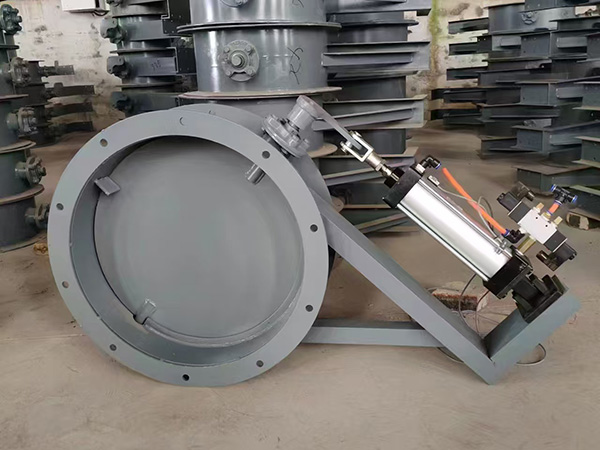
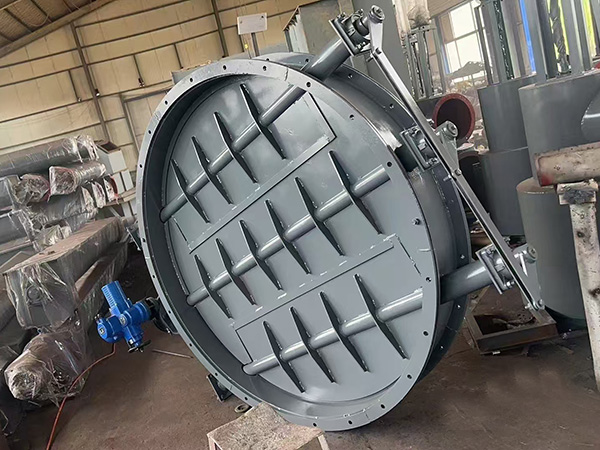
Types of Industrial Ventilation Butterfly Valves
1. Lug-Style Butterfly Valve:
Bolted directly between flanges (like a wafer style)
Can be installed between two dead-end flanges
Suitable for isolation and throttling
Common in ventilation systems DN80-600
2. Wafer-Style Butterfly Valve:
Sandwiched between pipe flanges with bolts through the body
Requires backing flanges for pipe support
Most economical option for ventilation
Standard in HVAC and dust collection DN50-1200
3. Double-Flanged Butterfly Valve:
Flanges on both inlet and outlet connections
Self-supporting in the pipeline
Better for larger sizes (DN350+)
Higher pressure ratings available
4. High-Performance Butterfly Valve:
Reinforced stem and seat design
Higher pressure ratings (up to 20 bar)
Better control characteristics (linear CV)
For critical process ventilation
Industrial Applications
Industrial Ventilation Butterfly Valve applications span numerous industries:
1. Dust Collection Systems:
Branch duct isolation in central systems
Filter bank isolation for maintenance
Exhaust fan isolation
Zone control in multi-filter systems
Typical size: DN150-600, pressure 500-2000 Pa
2. Industrial HVAC Systems:
Supply air handling units
Return air balancing
Outdoor air dampers
Exhaust fan control
Typical size: DN100-1000, pressure 250-1000 Pa
3. Process Exhaust Systems:
Welding smoke extraction
Metalworking coolant mist removal
Chemical process ventilation
High-temperature exhaust (to 600°C with special materials)
4. Pneumatic Conveying:
Dilute phase conveying lines
Material route switching
Conveying fan isolation
Typical pressure: 1000-5000 Pa
5. Cooling Tower Systems:
Basin isolation
Fan inlet control
drift eliminator access
Installation Best Practices
Proper installation ensures optimal industrial ventilation butterfly valve performance:
Installation Requirements:
Orientation: Install with stem horizontal or vertical (not inverted)
Upstream Distance: Minimum 3× diameter straight pipe upstream
Downstream Distance: Minimum 2× diameter straight pipe downstream
Support: Provide independent support for large valves (DN300+)
Access: Ensure clearance for actuator maintenance (minimum 500mm)
Leakage Standards:
Class A: 0% leakage (bubble-tight) - Metal seats
Class B: <0.5% of rated capacity - Soft seats
Class C: <0.1% of rated capacity - Standard seats
Control System Integration
Industrial ventilation butterfly valve integrates with building automation systems:
Control Signal Options:
On-Off: Binary signal (open/close)
Modulating: 0-10V, 2-10V, 4-20mA
Bus Communication: BACnet, Modbus, KNX
Position Feedback: 0-10V or 4-20mA position transmitter
Integration with Dust Collection:
Differential pressure-based fan speed control
Filter cleaning cycle synchronization
Zone isolation for maintenance
Emergency shutdown integration
Frequently Asked Questions
What is the typical pressure rating for industrial ventilation butterfly valves?
Standard industrial ventilation butterfly valve designs handle 500-2500 Pa working pressure. High-performance models rated to 10-20 bar are available for process applications. Most ventilation systems operate well below 5000 Pa, so standard industrial valves provide adequate performance with good control characteristics.
Can industrial ventilation butterfly valves be used for outdoor applications?
Yes, specify outdoor-rated valves with: UV-resistant seat materials (EPDM or silicone), corrosion-resistant construction (stainless steel or epoxy-coated), weatherproof actuators (IP66 or higher), and proper drainage holes to prevent water accumulation. Consider insulated valves for heating applications.
What is the difference between butterfly valves and dampers?
Industrial ventilation butterfly valve and dampers serve similar functions but have distinct characteristics. Butterfly valves have higher pressure ratings and bubble-tight shutoff capability. Dampers are simpler, lower-cost devices optimized for airflow balancing. Use butterfly valves for isolation and control; use dampers for balancing and modulating airflow.
How do I select the right actuator for my butterfly valve?
Actuator selection considers: (1) Required torque based on valve size and pressure, (2) Operating time requirements, (3) Fail-safe position needs, (4) Control signal compatibility, (5) Power availability. Electric actuators suit modulating control; pneumatic spring-return provides fail-safe operation. Consult manufacturer torque charts for proper sizing.
What maintenance is required for industrial ventilation butterfly valves?
Industrial ventilation butterfly valve maintenance includes: quarterly visual inspection, annual seat and stem seal inspection, periodic actuator service (per manufacturer schedule), and replacement of worn components when leakage exceeds acceptable levels. Keep spare seats and actuators in inventory for critical applications.
Conclusion
The industrial ventilation butterfly valve provides reliable, cost-effective airflow control for industrial HVAC, dust collection, and process ventilation systems. Proper selection considers valve type, material compatibility, actuator requirements, and control system integration.
When specifying industrial ventilation butterfly valve equipment, evaluate system pressure, temperature, and media characteristics. Partner with manufacturers offering application engineering support, sizing software, and comprehensive documentation.
Implement preventive maintenance programs to maximize valve service life. Stock critical spare parts including seat kits and actuator repair components. The industrial ventilation butterfly valve remains essential for reliable ventilation control in manufacturing, processing, and industrial facilities across diverse sectors.
References
American Society of Heating, Refrigerating and Air-Conditioning Engineers. (2021). ASHRAE Handbook: HVAC Systems and Equipment. ASHRAE Press.
American Society of Mechanical Engineers. (2021). ASME B16.34-2021: Valves - Flanged, Threaded, and Welded End. ASME.
International Society of Automation. (2020). ISA-75.01.01-2020: Flow Equations for Sizing Control Valves. ISA Standards.
European Committee for Standardization. (2019). EN 1751: Industrial Valves - Butterfly Valve Aerodynamic Testing. CEN.
Chen, Y., & Zhang, H. (2021). "Performance Optimization of Industrial Ventilation Dampers." Journal of Building Engineering, 42, 102-115.
 HOT PRODUCT
 CONTACT US