





BLOGSDETAILS
Industrial Filtration Bags Selection Guide for Buyers
Author:shangcheng Time:2026-07-31 12:18:29 Click:56
Selecting industrial filtration bags is a specification exercise, not a catalog pick. The right bag keeps a dust collector within its pressure-drop budget, meets emission limits, and runs long enough to make the math work. The wrong bag blinds early, leaks dust, or fails on temperature—and the cost shows up in downtime and replacement labor. This guide gives procurement and plant engineers a repeatable framework for choosing correctly the first time.
Define Your Process Conditions First
Before discussing media, document the operating envelope: gas temperature (continuous and peak), moisture content, dust loading, particle size distribution, and chemical composition including acids or oils. These inputs decide everything downstream. A filter bag supplier who quotes without this data is guessing, and guesses fail in the field. We ask every new buyer for a process gas summary before releasing a recommendation, because the media choice depends entirely on it.
Fiber and Finish Options Explained
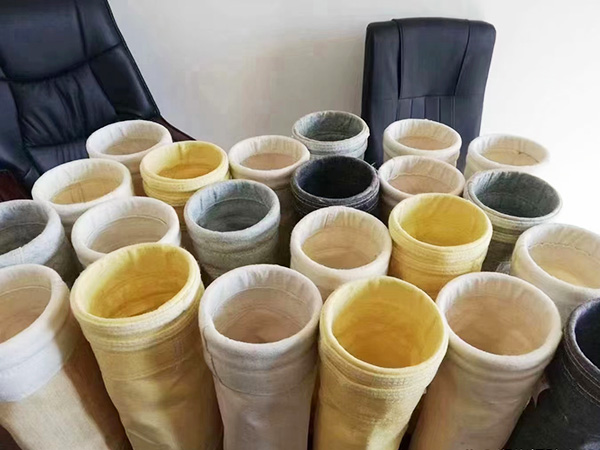
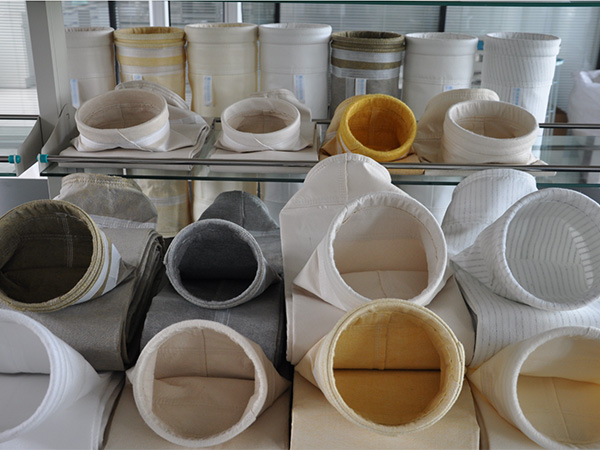
Common fibers include polyester (up to about 130°C, dry duty), polypropylene (chemical resistant, lower temperature), aramid (up to about 200°C), and fiberglass (up to about 260°C with treatment). Finishes matter: singed and calendared surfaces shed dust better; PTFE membrane captures fine particles at the surface and lowers residual pressure. For industrial filtration bags in sticky duties, a membrane finish often pays for itself in extended service life.
Bag Construction Styles
Bags are closed at the bottom and attach at the top via a snap band, flange, or cord. The choice follows the tube-sheet design. Snap-band bags seat quickly and are common in pulse-jet units. Flanged and cord styles suit different collectors. The top construction must match the cage and tube sheet exactly, or you invite bypass leakage at the header that undermines the entire filtration effort.
Sizing and Cage Compatibility
Bag diameter and length must match the cage and compartment layout. A bag even 5 mm oversize wrinkles and abrades; undersize stresses the top seal. Confirm the cage wire diameter, ring spacing, and any venturi filter cage requirement before ordering. A filter cage manufacturer working in tandem with your bag supplier eliminates fit surprises on delivery and reduces installation time on the floor.
Temperature and Chemical Matching
Temperature is the most common cause of premature failure. Running polyester above its limit embrittles the fiber; exceeding fiberglass treatment limits destroys the finish. Acids attack media at the dew point, so managing humidity and avoiding cold spots prevents acid condensation. Match the fiber and any coating to both the chemistry and the thermal profile, not just the average temperature recorded on a mild day.
Working With a Reliable Supplier
A capable filter bag factory offers more than product; it offers engineering support, material certification, and consistent batch quality. Ask about in-house testing, lead times, and whether they stock common sizes for emergency replacement. Suppliers who visit the plant, sample the dust, and stand behind performance are worth a modest premium over the lowest bid when uptime is on the line.
Total Cost of Ownership, Not Just Price
The cheap bag that lasts six months is rarely cheaper than the mid-priced bag that lasts eighteen. Factor in labor for change-outs, downtime, disposal, and emission-risk cost. For industrial filtration bags, a small increase in unit price often yields a large drop in cost per filtered cubic meter. Buyers who track cost-per-ton of product usually standardize on the higher-life option.
A Step-by-Step Selection Workflow
Start with the process data sheet. Pick the fiber for temperature and chemistry. Choose a finish for the dust behavior. Match construction to the tube sheet. Confirm cage compatibility. Validate with a small trial batch before a full rollout. This disciplined path, used by our filter bag supplier team, converts selection from guesswork into a documented decision that operations can trust.
Frequently Asked Questions
Which fiber is best for high-temperature dust?
Above about 200°C, aramid or treated fiberglass are typical choices. The final selection depends on exact temperature and any acidic components present in the gas stream.
How do I reduce bag change-out labor?
Standardize bag sizes across compartments, use snap-band construction where compatible, and keep a small stock of spares from a responsive supplier to avoid extended shutdowns.
Are membrane finishes worth the cost?
For fine or sticky dust, yes. They improve surface filtration and often extend life enough to offset the higher unit price through reduced cleaning and longer intervals.
How many bags should I trial before full purchase?
A single compartment or a representative row is enough to validate fit and cleaning behavior before committing to a full order across the plant.
Conclusion
Choosing industrial filtration bags well starts with process data and ends with disciplined validation. Match fiber, finish, and construction to real conditions, partner with a supplier who engineers rather than just ships, and judge the decision by total cost of ownership rather than the line-item price.
References
Chiang, H., et al. (2007). Study of filter media for industrial dust collection. Journal of Environmental Engineering, 133(4), 364–371.
Wang, L., et al. (2012). Performance of membrane filter media in baghouse. Separation and Purification Technology, 91, 95–102.
Xu, G., et al. (2009). Selection of filter media for high-temperature gas filtration. Powder Technology, 192(3), 374–380.
Li, C., et al. (2016). Life cycle cost analysis of industrial filter bags. Journal of Cleaner Production, 137, 702–710.
 HOT PRODUCT
 CONTACT US