





BLOGSDETAILS
How to Choose a Custom Filter Cage Manufacturer: A Buyer's Guide
Author:shangcheng Time:2026-10-22 09:45:40 Click:171
Standard catalog cages cover a surprising number of baghouse installations, but not all of them. Odd bag diameters, unusual lengths, venturi requirements, and aggressive process conditions push many plants toward custom work. The difference between a good and a bad custom filter cage manufacturer shows up months later—in bag life, pressure drop, and the number of emergency change-outs. This guide lays out what to check before you commit an order.
Why Custom Cages Instead of Standard Sizes?
Custom cages earn their place when the standard product cannot meet the fit or the duty. A collector with non-standard tube spacing, a bag length outside the catalog range, or a top cap that must integrate with a particular venturi all justify custom manufacture. So do environments where the standard finish will not survive—wet streams, high temperatures, or chemical exposure. The goal is not customization for its own sake, but a cage that fits exactly and lasts in service.
What to Send in Your RFQ
A complete request for quotation saves weeks of back-and-forth. Include the bag diameter and length, cage wire diameter and ring spacing if you have a sample, the top cap style, the number of pieces, and the expected replacement volume over two years. Add the process conditions: gas temperature, moisture, dust chemistry, and any acid dew point risk. A capable custom filter cage manufacturer will use these to recommend material and coating, not just to price the wire.
Manufacturing Capability and Tolerances
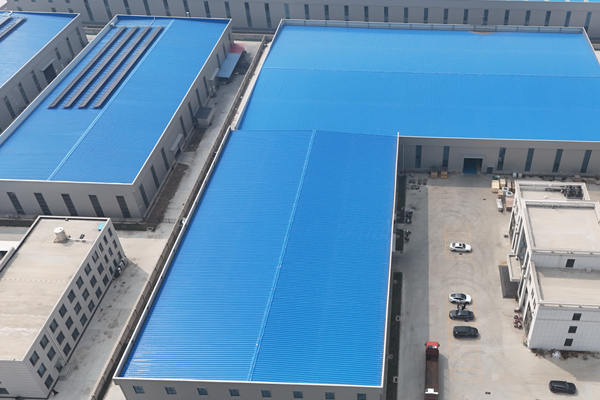
Cage quality is a tolerance story. Ask how the factory holds straightness—usually under 2 mm per meter—and ring spacing within ±1 mm. Check whether welds at ring intersections are continuous or spot tacked, and whether the vertical wires are cold-drawn from controlled stock. Visit the plant or ask for process videos; the difference between a wire shop and a dedicated filter cage factory is visible on the floor in fixtures, jigs, and inspection stations.

Material Options and Coatings
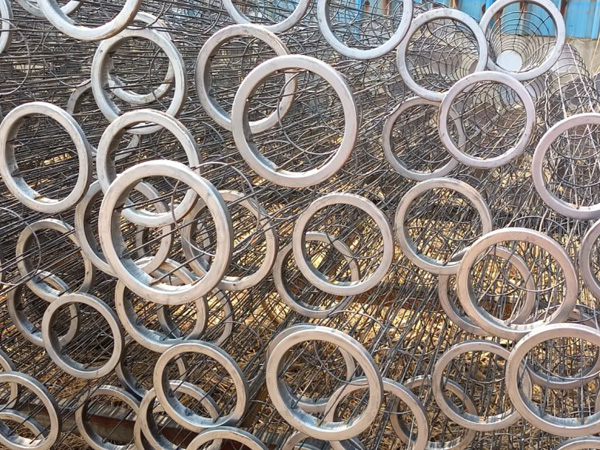
Confirm the manufacturer offers the full material range: carbon steel, hot-dip galvanized, stainless grades 304 and 316, and coated options such as epoxy or silicone. Each serves a different duty, and a supplier that only makes one finish will quietly steer you toward it. Ask how coatings are applied and tested for pinholes, because a thin coating fails exactly where you cannot see it—inside the bag.
Quality Control and Inspection Data
Demand a dimensional inspection report with every batch. The report should list straightness, diameter, ring spacing, and coating condition measured on a defined sampling plan. Material certificates for stainless and galvanizing thickness readings should accompany each delivery. If a manufacturer cannot produce these documents, treat that as a warning sign—bag failure caused by an out-of-spec cage is expensive and easy to prevent upstream.
Lead Times, Tooling, and Minimum Orders
Custom production usually involves tooling or jig setup, so ask about minimum order quantities and how tooling costs are handled. A serious supplier will structure the first order so tooling is amortized over a committed volume rather than charged fully upfront. Check lead time for the initial batch and, just as importantly, the lead time for emergency spares. The best price means nothing if a critical line waits six weeks for three cages.
Red Flags to Avoid in a Supplier
Walk away from manufacturers who quote without asking about your process, who cannot state their tolerances in writing, who treat inspection reports as an extra-cost option, or who substitute materials without approval. Vague answers about coating thickness, weld method, or steel grade are red flags too. A reliable custom filter cage manufacturer answers these questions from memory because they control the process every day.
Frequently Asked Questions
What is a typical minimum order for custom cages?
It depends on the design and tooling. Many factories accept 50 to 100 pieces for a standard custom diameter; highly specialized profiles may require more to amortize tooling.
Can a manufacturer match an existing cage without drawings?
Yes. Send a physical sample and a full set of measurements; most suppliers reverse-engineer the dimensions and confirm tolerances before producing.
How long do custom cages take to produce?
Typical first batches run two to five weeks including tooling, with repeat orders faster. Confirm the schedule in writing before you book a shutdown.
What tolerances should I demand?
Demand straightness under 2 mm per meter, ring spacing within ±1 mm, and a documented dimensional report on every batch.
Conclusion
Choosing a custom filter cage manufacturer is a decision about process control, not just price. Verify tolerances, demand inspection data, confirm material and coating capability, and structure the order so tooling and spares make sense. A supplier that documents its work will protect your filter bags and your uptime long after the invoice is paid.
References
Saleem, M., et al. (2012). Effect of filtration velocity and dust concentration on cake formation and filter operation in a pilot scale jet pulsed bag filter. Journal of Hazardous Materials, 241–242, 133–140.
Zhang, Q., et al. (2016). Numerical simulation of the airflow field in a baghouse. Powder Technology, 297, 399–406.
Simon, X., et al. (2008). Pulse-jet cleaning of filter bags: effect of operating parameters. Powder Technology, 186(3), 256–264.
Ellenbecker, M. J., & Leith, D. (1981). Dust removal from non-woven fabrics: cleaning methods and parameters. Journal of the Air Pollution Control Association, 31(11), 1176–1182.
 HOT PRODUCT
 CONTACT US