





BLOGSDETAILS
Filter Cage Welding Process and Quality Standards
Author:shangcheng Time:2026-05-16 17:07:34 Click:158
Filter Cage Welding Process and Quality Standards
Filter cage welding process techniques directly determine baghouse filtration performance, structural integrity, and service life in dust collection systems serving industrial manufacturing, power generation, and process applications. Quality filter cage welding process methods ensure that filter cages maintain structural rigidity, corrosion resistance, and dimensional accuracy throughout demanding filtration service. This comprehensive analysis examines filter cage welding process technologies, quality standards, and performance considerations that filtration system operators need to understand.
Filter Cage Design Fundamentals and Structural Requirements
Filter cage structural design determines the filter cage welding process requirements that ensure adequate strength, stiffness, and corrosion resistance for baghouse applications. Wire diameter selection, cage diameter, wire spacing, and top-cap configuration all influence filter cage welding process parameters that maintain design intent throughout fabrication. Understanding these design relationships enables specification of filter cage welding process methods that achieve design objectives.
Structural analysis of filter cage designs reveals critical stress concentrations that filter cage welding process must address to prevent premature failure. Top-cap to wire welds, longitudinal wire splices, and center rod connections create stress concentration points requiring appropriate weld quality. Filter cage welding process selection must accommodate these stress concentrations while maintaining cost competitiveness that market conditions demand.
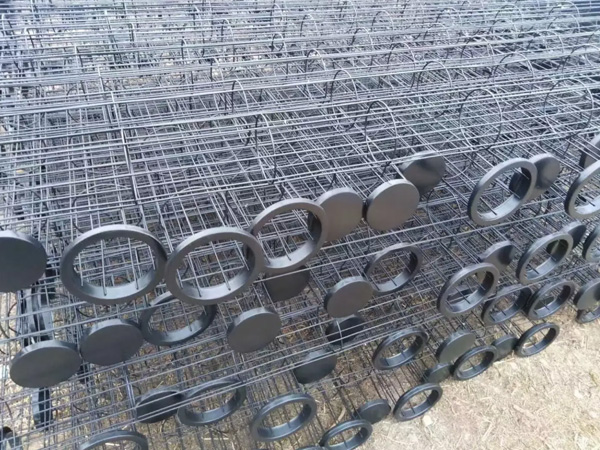
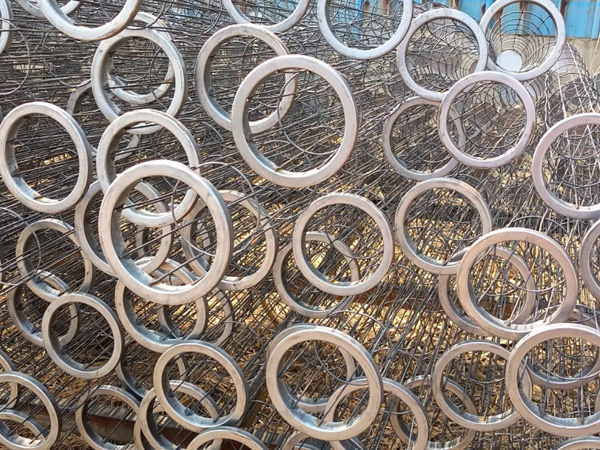
Welding Wire Material Selection for Filter Cage Applications
Filter cage wire materials range from standard carbon steel to stainless steels and specialty alloys that determine filter cage welding process requirements and corrosion resistance capabilities. Carbon steel filter cages suit dry, non-corrosive applications, while stainless steel grades (304, 316L) provide corrosion resistance for moist or chemically active filtration environments. Alloy selection determines filter cage welding process parameters including filler metal requirements, preheat needs, and post-weld treatment.
Material certification requirements for filter cage welding process applications in regulated industries demand documented material traceability from raw material through finished cage. Mill certifications, heat numbers, and material test reports verify that wire materials meet specified mechanical properties and chemical composition requirements. Quality-focused filter cage welding process operations maintain material traceability systems that satisfy regulatory and customer quality assurance requirements.
GMAW/GTAW Welding Processes for Filter Cage Manufacturing
Gas metal arc welding (GMAW) provides efficient filter cage welding process capability for high-volume carbon steel and stainless steel filter cage production. Short-circuit or pulsed-spray transfer modes offer different filter cage welding process characteristics suited to various wire sizes and production rates. Equipment automation enables consistent filter cage welding process quality that manual welding cannot achieve across production volumes.
Gas tungsten arc welding (GTAW) delivers superior weld quality for filter cage welding process applications requiring exceptional aesthetics or minimal spatter. While slower than GMAW, GTAW produces clean welds without spatter that requires post-weld cleaning. This filter cage welding process suits premium applications where appearance matters or where spatter could interfere with filter bag installation.
Resistance Spot Welding for High-Volume Filter Cage Production
Resistance spot welding provides extremely high production rates for filter cage welding process applications where wire spacing and diameter suit resistance welding parameters. Cross-wire intersections can be welded at high speed without consumable electrode costs that arc welding processes require. This filter cage welding process efficiency makes resistance welding the dominant method for standard-size carbon steel filter cage production.
Weld quality verification for filter cage welding process resistance welds requires different methods than arc weld inspection due to the small weld nugget size and visual inaccessibility. Pull-off testing, shear testing, and periodic destruct examination verify that resistance welds achieve adequate strength without compromising wire integrity. Process monitoring and statistical control methods maintain filter cage welding process quality across high-volume production runs.
Automated Welding Systems for Consistent Quality
Automated filter cage welding process systems deliver consistent quality that manual welding cannot achieve across production volumes, maintaining weld parameters within tight tolerances throughout operation. Robotic welding cells, automated fixturing, and computerized parameter control ensure that every filter cage welding process cycle produces identical results regardless of operator skill variations or fatigue effects.
Welding process automation for filter cage welding process applications requires specialized equipment designed for circular or cage geometry welding. Cantilever welding systems, turntable fixtures, and multiple torch configurations address the unique geometry challenges that filter cage welding presents. Equipment investment in automated filter cage welding process systems pays dividends through improved quality, reduced labor costs, and consistent production rates.
Weld Quality Inspection and Testing Methods
Visual inspection provides primary filter cage welding process quality verification for most filter cage applications, identifying obvious defects like cracks, excessive porosity, or incomplete fusion that compromise structural integrity. Inspector training and certification ensure that visual inspection detects relevant discontinuities while avoiding false rejection of acceptable welds. Filter cage welding process quality assurance programs establish acceptance criteria and inspection procedures that guide quality verification activities.
Mechanical testing methods including pull-off testing, bend testing, and metallographic examination provide quantitative filter cage welding process quality verification for critical applications or process development. These destructive testing methods complement visual inspection by verifying internal weld quality that surface examination cannot assess. Testing protocols for filter cage welding process validation should reflect actual service conditions that filter cages will encounter.
Corrosion Resistance and Surface Treatment Considerations
Weld corrosion resistance in filter cage welding process applications depends on base metal selection, filler metal compatibility, and post-weld treatment that prevents galvanic or HAZ corrosion. Stainless steel filter cage welds may require descaling and passivation treatments that restore corrosion resistance affected by welding heat. Carbon steel filter cage welding process welds may require protective coating application that prevents corrosion at weld locations.
Hot-dip galvanizing after filter cage welding process fabrication provides excellent corrosion protection but requires careful process control to prevent distortion or weld quality issues from thermal shock. Wire selection and weld quality requirements for galvanized filter cages differ from ungalvanized fabrication, requiring filter cage welding process specifications that accommodate galvanizing effects.
Dimensional Accuracy and Tolerance Control
Filter cage welding process dimensional accuracy affects bag fit, cage centering, and filter bag service life in baghouse applications. Wire spacing uniformity, cage straightness, and diameter consistency ensure that filter bags seat properly and receive uniform stress distribution during filtration pulses. Dimensional control through filter cage welding process fixture design and statistical process control maintains tolerances that prevent premature filter bag failure.
Measurement and inspection procedures for filter cage welding process dimensional verification include diameter gauges, straightness checking, and spacing measurement that verify compliance with design specifications. Documentation of filter cage welding process dimensional measurements provides quality records that demonstrate process capability and identify adjustment requirements.
Production Efficiency and Cost Optimization
Filter cage welding process production efficiency optimization balances throughput requirements against quality and cost objectives that determine overall competitiveness. Cycle time reduction, consumables optimization, and labor productivity improvements contribute to filter cage welding process cost reduction without compromising quality. Lean manufacturing principles applied to filter cage welding process operations identify waste elimination opportunities that improve profitability.
Quality cost analysis for filter cage welding process operations quantifies the impacts of internal and external failure costs, enabling targeted improvement investments that reduce total quality costs. Scrap reduction, rework elimination, and warranty cost prevention often justify filter cage welding process quality improvement investments that improve both quality and profitability simultaneously.
Making Strategic Filter Cage Welding Process Decisions
Strategic filter cage welding process decisions require evaluating production requirements, quality standards, and cost constraints that determine appropriate technology and method selection. Capacity planning, technology investment, and workforce development all contribute to filter cage welding process capability that serves customer requirements profitably. Quality-focused filter cage welding process operations that prioritize customer satisfaction build competitive positions in demanding filtration markets.
Remember that filter cage welding process quality directly affects filtration system performance, reliability, and operating costs throughout filter cage service life. Invest in quality materials, appropriate welding processes, and systematic quality control that ensures reliable filter cage performance. Your strategic filter cage welding process decisions support filtration system performance and customer satisfaction that drives business success.
References
American Welding Society. (2021). AWS D1.1/D1.1M:2021 - Structural welding code - Steel. AWS Publications.
American Society of Mechanical Engineers. (2020). ASME BPVC Section IX - Welding qualification standards. ASME Standards.
International Organization for Standardization. (2019). ISO 15614-1:2018 - Welding procedure qualification testing. ISO Central Secretariat.
Filtration Society. (2020). FS technical papers - Filter cage manufacturing quality standards. FS Publications.
American Society of Testing and Materials. (2019). ASTM F706-18 - Standard specification for welding of steel filter cages. ASTM Publications.
 HOT PRODUCT
 CONTACT US