






BLOGSDETAILS
Filter Bag Micron Rating Explained for Industrial Filtration
Author:shangcheng Time:2026-10-20 16:28:54 Click:72
Few specifications cause more confusion in dust collection than the filter bag micron rating. Buyers see a number stamped on a datasheet and assume it tells them exactly what the bag will capture, but the reality is more subtle. The same media can rate differently depending on how the test was run, what dust was used, and what efficiency the manufacturer chose to report. This article explains what micron ratings really mean, how they are measured, and how to specify them correctly for industrial filtration.
What Does a Micron Rating Actually Mean?
A micron is one thousandth of a millimeter—roughly the width of a fine human hair is about 70 microns, while most visible dust is larger than 10 microns. The filter bag micron rating describes the particle size at which the media achieves a stated removal efficiency. The number alone is meaningless without the efficiency behind it, which is why two bags both labeled as 5-micron can perform very differently on the same collector.
Nominal vs Absolute Ratings
Nominal ratings describe media that removes a stated percentage—usually 50 to 90 percent—of particles at a given size. Absolute ratings describe media engineered to remove essentially all particles at or above the rated size, typically 99 percent or better under defined test conditions. For emission-critical applications, rely on absolute ratings or on efficiency data from a recognized test standard; nominal ratings are best treated as a starting point for comparison.
How Particle Size Distribution Drives the Choice
The right rating starts with knowing your dust, not the other way around. A laser diffraction analysis of the process dust gives the full particle size distribution, including the fine tail that drives emissions. If your dust has a significant fraction below 5 microns, a 10-micron rated bag will never meet a strict limit no matter how good the media is. Send the dust analysis to your filter bag supplier and let the rating be chosen against the real distribution, not a guess.
Media Types and Their Effective Micron Ranges
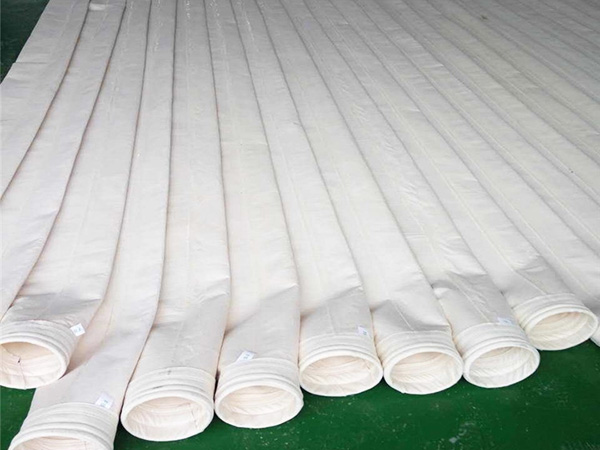
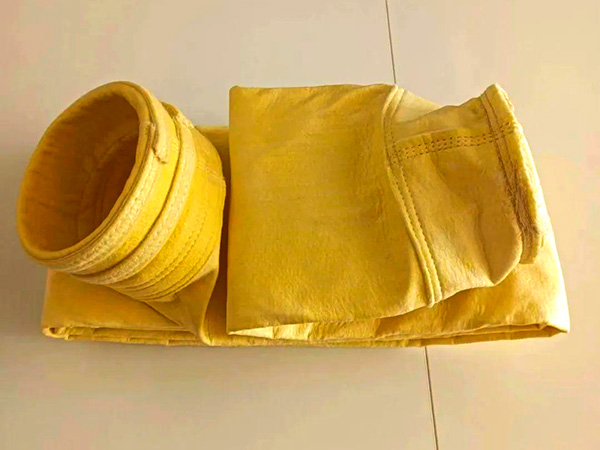
Woven media generally captures down to the 10-to-50 micron range depending on weave density. Needlefelt media reaches into the 1-to-10 micron range, with finer fibers improving capture at the same weight. Membrane media—a microporous film laminated to a felt substrate—offers surface filtration that can hold sub-micron particles while keeping pressure drop low. Each type has a practical micron envelope, and the choice must balance efficiency against airflow and cleanability.
Emission Limits and Testing Standards
Industrial emission limits are expressed in mass per volume, such as milligrams per cubic meter, not in microns. To translate a limit into a filter bag micron rating, you need the dust density and particle size distribution, then a media efficiency curve. Standard test methods for filter media efficiency—such as those based on fractional penetration measurements—provide the curve a responsible manufacturer uses to document performance rather than quoting an optimistic single number.
Common Misconceptions in Specifying Micron Ratings
The biggest error is assuming a lower micron rating is always better. Finer media raises pressure drop, increases cleaning frequency, and can shorten bag life if the dust load is high. Another error is comparing ratings from different manufacturers as if they were measured the same way—they often are not. A third is ignoring the dust cake: once a stable cake forms, the effective filtration is finer than the virgin media rating, which is why real collectors often run cleaner than bench tests suggest.
Working With a Supplier on the Right Rating
Ask your filter bag factory for the efficiency curve behind any rating, not just the headline number. Provide the dust analysis, gas temperature, moisture, and emission target, and request a trial batch if the application is critical. A supplier that asks these questions before quoting is engineering a solution; one that sells on the micron number alone is selling a guess.
Frequently Asked Questions
Is a lower micron rating always better?
No. Lower ratings mean finer media, which increases pressure drop and cleaning demand. Choose the coarsest rating that reliably meets your emission limit.
What micron rating do I need to meet emission limits?
There is no universal answer. Convert your mass-based limit into a required efficiency using your dust size distribution, then select media with a documented efficiency curve that exceeds it.
Why does the same bag perform differently at two plants?
Because dust, temperature, moisture, and cleaning intensity differ. Micron rating is one input; the operating envelope decides the outcome.
How is a filter bag micron rating tested?
Fractional penetration tests challenge the media with test aerosols of known sizes and measure capture efficiency per size class, usually following a recognized standard method.
Conclusion
The filter bag micron rating is a useful specification only when you understand the efficiency behind the number. Match the rating to your particle size distribution, demand documented test data from the supplier, and verify with trial media in the field. Do that, and the rating becomes a reliable tool instead of a source of surprises.
References
Cheng, Y. S., & Yeh, H. C. (1994). Particle collection efficiency of fibrous filter media. Aerosol Science and Technology, 20(2), 177–191.
Brown, R. C. (1993). Air Filtration: An Integrated Approach to the Theory and Applications of Fibrous Filters. Pergamon Press.
Wang, C. S., & Otani, Y. (2013). Removal of nanoparticles from gas streams by fibrous filters: A review. Industrial & Engineering Chemistry Research, 52(1), 5–17.
Japuntich, D. A., et al. (2007). A comparison of two nano-sized particle air filtration tests in the sub-micrometer range. Journal of Nanoparticle Research, 9(1), 93–107.
 HOT PRODUCT

 CONTACT US