





BLOGSDETAILS
Activated Carbon Adsorption Box Working Principle Explained
Author:shangcheng Time:2026-05-12 15:15:37 Click:78
Activated Carbon Adsorption Box Working Principle
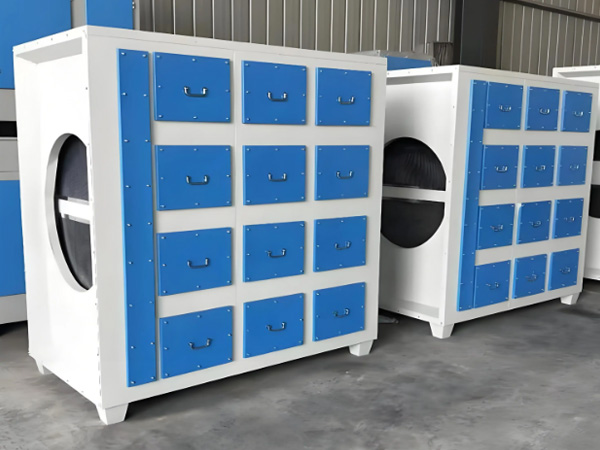
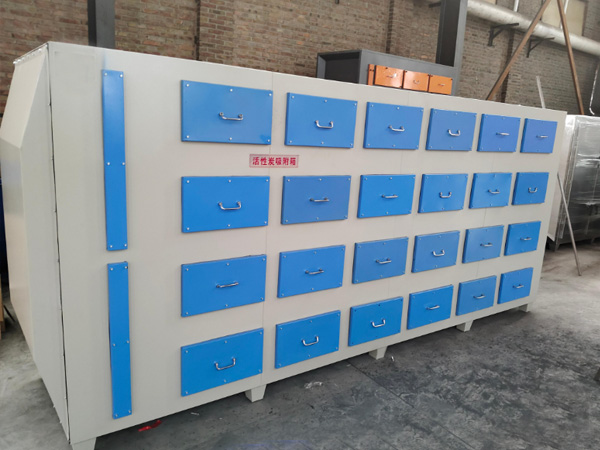
An activated carbon adsorption box is an industrial air purification device designed to remove volatile organic compounds (VOCs), odors, and hazardous gases from contaminated exhaust streams. These systems are widely used in painting workshops, chemical plants, printing facilities, pharmaceutical production, and waste treatment operations.
What Is an Activated Carbon Adsorption Box
The system consists of:
Activated carbon media
Air distribution chamber
Filtration housing
Air inlet and outlet sections
Contaminated air passes through activated carbon layers where harmful gas molecules are adsorbed onto the porous carbon surface.
Adsorption Mechanism Explained
The adsorption process occurs through physical attraction between gas molecules and the internal pore structure of activated carbon. Due to its extremely large surface area, activated carbon can capture a wide range of organic compounds efficiently.
VOC Removal Principles
An activated carbon adsorption box is highly effective for removing:
Benzene
Toluene
Xylene
Organic solvents
Industrial odors
Adsorption efficiency depends on gas concentration, temperature, humidity, and airflow velocity.
Activated Carbon Material Structure
Activated carbon contains a highly porous internal structure with micro-pores and meso-pores that maximize adsorption surface area.
Different carbon materials are selected depending on pollutant type and industrial operating conditions.
Airflow and Filtration System Design
Proper airflow distribution ensures maximum contact between contaminated air and carbon media. Uneven airflow may reduce adsorption efficiency and shorten media lifespan.
Industrial systems often include pre-filtration stages to remove dust particles before gas adsorption.
Industrial Waste Gas Applications
Common applications include:
Spray painting lines
Chemical storage facilities
Printing plants
Pharmaceutical manufacturing
Food processing industries
Maintenance and Carbon Replacement
Over time, activated carbon becomes saturated and loses adsorption capacity. Regular monitoring and replacement schedules are necessary to maintain purification performance.
Advantages and Limitations
Advantages:
High VOC removal efficiency
Simple operation
Low maintenance complexity
Limitations:
Carbon replacement cost
Reduced performance at high humidity
Limited effectiveness for certain inorganic gases
Conclusion
An activated carbon adsorption box provides an efficient and reliable solution for industrial VOC treatment and odor control. Proper system design and carbon media selection are essential for achieving long-term purification performance.
References
Ruthven, D.M., Principles of Adsorption and Adsorption Processes
Environmental Science & Technology Journal
Chemical Engineering Journal – VOC Adsorption Research
Journal of Hazardous Materials – Activated Carbon Applications
 HOT PRODUCT
 CONTACT US