





BLOGSDETAILS
VOC Treatment Equipment Selection Guide for Industry
Author:shangcheng Time:2026-09-28 21:11:11 Click:103
Industrial facilities that emit volatile organic compounds (VOCs) face tightening air-quality regulations, neighbor-sensitive odor complaints, and internal pressure to cut energy cost. Choosing the right VOC treatment equipment determines whether a plant meets its permit, controls operating expense, and avoids a costly retrofit two years later. The mistake most commonly made is selecting a technology on name recognition rather than on the actual characteristics of the exhaust stream. The same oxidizer that is economical for a steady, high-concentration paint line can be the wrong choice for an intermittent, low-concentration laboratory exhaust. This guide walks through the technology families, the factors that decide between them, and a practical selection workflow that engineers and procurement teams can apply to their own process data.
What VOC Treatment Equipment Must Achieve
Before comparing technologies, define the control objective. Most installations must meet a permitting limit expressed as a mass emission rate (kg/h or lb/h), a concentration limit (mg/Nm³), or a destruction/removal efficiency (DRE, often 90–90%). The control equipment must also do this consistently across the range of operating conditions the plant actually experiences, not just at a design point. A realistic VOC treatment equipment specification starts with a representative emission profile: average and peak concentration, total flow rate, compound mixture, temperature, humidity, and particulate content. Without that profile, any technology comparison is guessing.
The Main Technology Families
Industrial VOC control falls into five broad families. Each manipulates the pollutant differently and favors a different set of operating conditions.
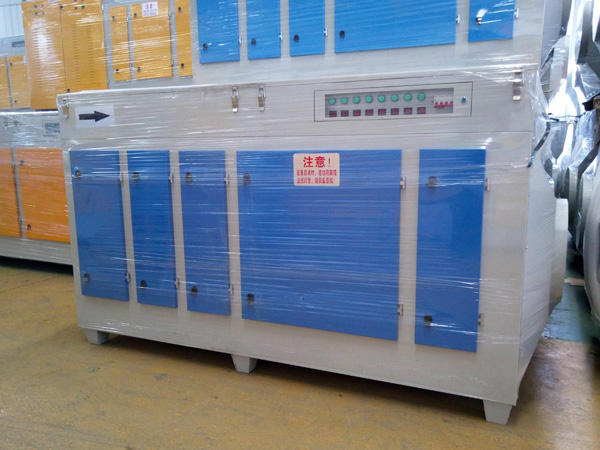
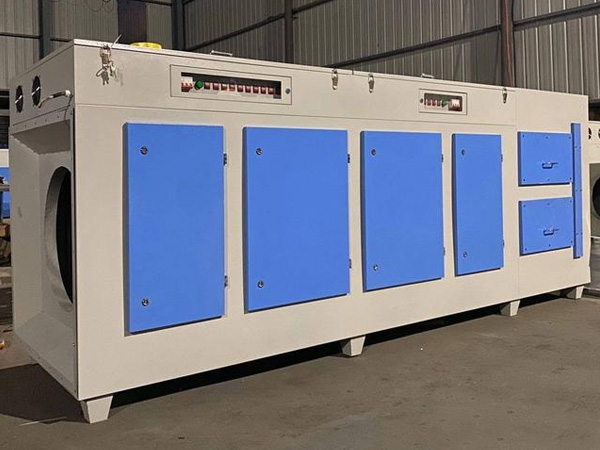
Thermal and Regenerative Thermal Oxidizers (RTO)
A thermal oxidizer destroys VOCs by heating the exhaust to 760–850°C, holding it long enough for oxidation to CO₂ and water. A VOC treatment equipment design of this type achieves high DRE on a wide range of compounds, including those that are difficult to adsorb or biodegrade. The regenerative variant (RTO) recovers heat from the cleaned gas in ceramic beds, cutting fuel use dramatically when the inlet concentration is moderate to high. RTOs suit continuous, high-flow streams; their weakness is high capital cost and significant fuel consumption at very low VOC concentrations.
Catalytic Oxidizers
Catalytic oxidizers lower the required destruction temperature to roughly 300–500°C by passing the gas over a precious-metal or base-metal catalyst. They reduce fuel consumption relative to thermal oxidation and work well for VOC mixtures that are catalytically active. The limitation is catalyst poisoning: compounds containing sulfur, phosphorus, silicon, or certain halogens deactivate the catalyst and require careful pretreatment or a different technology.
Activated Carbon Adsorption Systems
An adsorption system passes the exhaust through a bed of activated carbon, which captures VOC molecules on its internal pore surface. This VOC treatment equipment approach works best for low-concentration, high-volume streams and compounds with good affinity for carbon. The captured VOCs can later be recovered by steam or inert-gas desorption, or the spent carbon can be thermally regenerated or replaced. Adsorption does not destroy the pollutant; it concentrates it, so the plant must manage saturated carbon as a hazardous or regulated waste stream.
Biofiltration
Biofilters and biotrickling filters treat VOCs biologically, using microorganisms on a packed bed to oxidize compounds to biomass, CO₂, and water. They are economical for high-volume, low-concentration, water-soluble, and biodegradable VOCs such as some alcohols, aldehydes, and esters. They are unsuitable for non-biodegradable or toxic compounds and require stable humidity and nutrient conditions.
Condensation and Absorption
Condensation recovers VOCs by cooling or compressing the stream until the compounds liquefy; it favors high-concentration streams where recovery has value. Absorption (scrubbing) passes the gas through a liquid that dissolves or reacts with the VOC, useful for water-soluble compounds. Both are niche relative to oxidation and adsorption but valuable in specific recovery-oriented applications.
Comparison Factors That Drive Selection
The following factors, evaluated against the emission profile, usually decide the technology:
Inlet concentration: Low concentrations favor adsorption or biofiltration; high concentrations justify oxidation or recovery.
Flow rate: Large volumes favor systems with low pressure drop and modest footprint, such as RTO or carbon beds.
Compound mixture: Halogenated, sulfurous, or silicone-laden streams constrain catalyst and carbon choices.
Load variability: Intermittent or widely varying loads favor technologies with fast response and low idle cost.
Recovery value: If the solvent has reclaim value, adsorption with desorption or condensation may pay back.
Site constraints: Available footprint, utility capacity, and permitting for thermal units affect feasibility.
Matching Equipment to Operating Conditions
Concentration and Flow Rate
As a rule of thumb, very low concentration (< 100–200 mg/Nm³) with high flow points toward adsorption or biofiltration, because oxidation would burn fuel to destroy a small pollutant mass. Moderate to high concentration justifies thermal or catalytic oxidation, and at sufficiently high concentrations the oxidation becomes nearly self-sustaining (the VOC heat of combustion offsets fuel demand). The intersection where adsorption and oxidation become competitive depends on local energy cost and carbon disposal cost.
Compound Characteristics
Carbon affinity varies widely. Hydrocarbons, many solvents, and non-polar organics adsorb well; highly polar or very low-molecular-weight compounds adsorb less strongly. Compounds that are toxic to microbes are poor biofilter candidates. Halogenated VOCs may form acidic byproducts in oxidation, requiring scrubbing of the cleaned gas. A competent VOC treatment equipment supplier will request a gas chromatography or at least a representative compound list before recommending a bed or oxidizer design.
Load Variability
Batch processes, start-up/shutdown cycles, and seasonal production create load swings. Adsorption beds handle variability by storing VOCs during peaks and desorbing on a schedule, but they can saturate if the peak exceeds capacity. Oxidizers handle variability less gracefully because they must stay hot; some plants add a buffer tank or a smaller supplemental heater. The selection must consider the worst credible operating week, not the annual average.
Energy and Lifecycle Cost Considerations
Capital cost is only the visible part. The dominant operating cost of an oxidizer is fuel or electricity; the dominant cost of an adsorption system is carbon replacement or regeneration, plus the handling and disposal of spent material. Biofilters have low energy cost but higher attention to media health and periodic media replacement. A defensible selection compares lifecycle cost over the equipment's expected service life, including utility escalation and waste handling. This is where a VOC treatment equipment decision that looks cheap upfront can become expensive, and vice versa.
Regulatory and Permitting Factors
Permits define not only the limit but often the acceptable technology or monitoring. Some authorities require continuous emission monitoring for thermal oxidizers above a threshold, or restrict the accumulation of hazardous waste carbon on site. Oxidizer NOx formation at high temperature may itself be regulated, pushing toward catalytic or low-temperature designs. Engage the permitting authority's expected limits early, because they constrain the feasible technology set before any vendor quote is useful.
A Practical Selection Workflow
A structured selection process reduces the risk of a poor choice:
Build a representative emission profile from measurement, not assumption.
Screen technologies against concentration, flow, and compound constraints.
Estimate lifecycle cost for the surviving candidates.
Confirm regulatory and site constraints (footprint, utilities, waste handling).
Request a pilot or reference installation for the shortlisted technology.
Select on total cost of compliance, not lowest capital bid.
Procurement Information Buyers Should Prepare
To get an accurate quote, prepare a data package: exhaust flow range, VOC concentration range and compound list, gas temperature and humidity, particulate loading, desired DRE or limit, available utilities, footprint, and waste handling constraints. The more precise this package, the more comparable the vendor proposals will be. A vague inquiry produces proposals that are not comparable, which is the most common cause of a VOC treatment equipment purchase that later needs correction.
FAQ
Which VOC treatment technology is best for low concentrations?
For low-concentration, high-volume streams, activated carbon adsorption or biofiltration is usually more economical than oxidation, which would consume significant fuel to destroy a small pollutant mass. The final choice depends on compound biodegradability and site constraints.
Can one system handle a variable VOC load?
Yes, but the technology matters. Adsorption beds buffer peaks by storing VOCs, while oxidizers need to remain heated and may require buffer tanks. Evaluate against the worst credible operating condition, not the annual average.
What compound properties limit technology choice?
Halogenated, sulfur-, phosphorus-, or silicone-containing compounds can poison catalysts and complicate oxidation byproducts. Non-biodegradable or toxic compounds rule out biofiltration. Always provide a compound list before selecting.
How should I compare vendor proposals fairly?
Provide all shortlisted vendors the same emission profile and constraints, then compare on lifecycle cost and guaranteed performance, not just capital price. Require references or pilot data for the proposed technology.
Conclusion
Selecting VOC treatment equipment is fundamentally a process-matching exercise. The technology families—thermal and catalytic oxidation, activated carbon adsorption, biofiltration, and condensation or absorption—each serve a distinct region of concentration, flow, compound, and variability. The defensible decision comes from a measured emission profile, an honest comparison of lifecycle cost, and early alignment with permitting limits. Buyers who invest in accurate process data and a structured workflow avoid the expensive retrofit that follows a technology chosen on familiarity alone.
References
Ruthven, D. M. (1984). Principles of Adsorption and Adsorption Processes. John Wiley & Sons, New York.
Yang, R. T. (2003). Adsorbents: Fundamentals and Applications. John Wiley & Sons.
Khan, F. I., & Ghoshal, A. K. (2000). Removal of volatile organic compounds from polluted air. Journal of Loss Prevention in the Process Industries, 13(6), 527–545.
US EPA (1991). Control Technologies for Hazardous Air Pollutants: Part II — Adsorption. EPA/450/3-91/015.
Crittenden, J. C., Trussell, R. R., Hand, D. W., Howe, K. J., & Tchobanoglous, G. (2012). Water Treatment: Principles and Design, 3rd Edition. John Wiley & Sons.
 HOT PRODUCT
 CONTACT US