





PRODUCTDETAILS
Fabric Filter Dust Collector
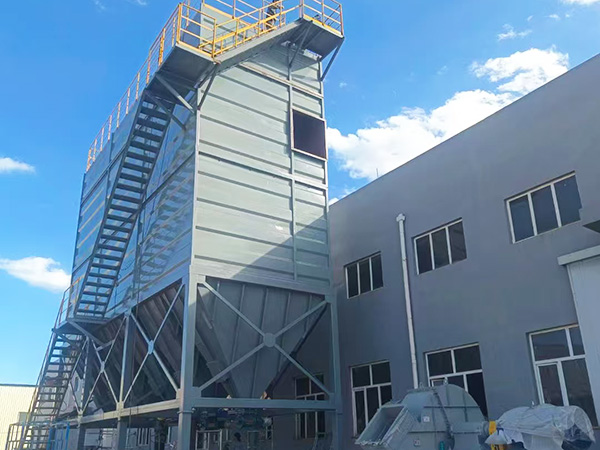
A Fabric Filter Dust Collector(commonly known as a baghouse)is a highly efficient air pollution control device that uses woven or felted fabric bags to capture and remove particulate matter(dust)from industrial gas streams.It operates on the principle of surface filtration,where dust accumulates on the outer surface of the filter media,forming a dust cake that enhances filtration efficiency.
Core Operating Principle
Filtration:Dust-laden gas enters the collector and passes through the fabric filter bags.Dust particles are trapped on the bag surface,while clean gas permeates through the fabric.
Dust Cake Formation:A layer of dust(dust cake)builds up on the bags,acting as an auxiliary filter and increasing efficiency.
Cleaning Cycle:When pressure drop(resistance)becomes too high,the cleaning system activates to remove the dust cake.
Dust Removal:Dislodged dust falls into the hopper below for collection and disposal.
Key Precautions for Operation&Maintenance
Selection&Installation
Match filter bag material(e.g.,Polyester,PTFE,Fiberglass)to gas temperature,moisture content,and chemical corrosiveness.
Ensure the bag cage is smooth and free of burrs to prevent tearing bags during installation.
Securely seal bags to the tube sheet to prevent bypass leakage.
Install inlet/outlet dampers,pressure gauges,and temperature sensors for monitoring.
Operational Parameters
Maintain stable pressure drop(typically 1200–1800 Pa).A sudden rise indicates bag blockage;a sudden drop signals bag failure.
Keep gas temperature above the dew point to prevent condensation,bag blinding,and corrosion.
Avoid exceeding the maximum operating temperature of the filter media to prevent melting or embrittlement.
Set pulse-jet cleaning pressure(0.3–0.6 MPa)and interval correctly to avoid over-cleaning and premature bag wear.
Start-up sequence:Activate the cleaning system first,then the main fan;reverse for shutdown.
Preventing Common Failures
Bag Blinding(Clogging):Avoid high moisture,sticky dust,or insufficient cleaning.Use hydrophobic bags for humid conditions.
Bag Burning/Degradation:Install spark arrestors or pre-cleaners for high-temperature or spark-containing gases.
Abrasive Wear:Use wear-resistant bags or protective coatings for abrasive dust(e.g.,sand,cement).
Corrosion:Use chemical-resistant materials and ensure good drainage to prevent liquid buildup.
Safety Protocols
For combustible dust(metal,coal,grain):Use anti-static bags,ensure proper grounding,install explosion vents,and prohibit open flames.
Maintenance Safety:Lockout/tagout(LOTO)power before servicing.Ventilate and test oxygen levels(19.5–23.5%)before entering the housing.
Fire Safety:Have a CO₂fire suppression system;never use water on dust collector fires.
Routine Maintenance
Inspect bags for holes,tears,or wear every 6–12 months.
Check and replace pulse valve diaphragms,seals,and gaskets regularly.
Empty dust hoppers frequently to prevent dust buildup and re-entrainment.
Drain moisture from compressed air tanks daily to prevent water damage.
 BLOGS
BLOGS
-
Maintenance Measures Before Long-Term Shutdown of Baghouse Dust Collector
2026-04-21 10:55:33
-
How to Select Filter Bag Material of Baghouse Dust Collector According to Flue Gas Characteristics
2026-04-21 10:53:08
-
Low Pressure Drop(Sudden Differential Pressure Drop)of Baghouse Dust Collector:Filter Bag Breakage or
2026-04-21 10:50:35
-
How to Select Baghouse Dust Collector According to Dust Characteristics
2026-04-21 10:48:21
-
Requirements for Flange Parallelism,Coaxiality and Flow Direction During Ventilation Butterfly Valve
2026-04-21 10:46:04
CONTACT US